Showing posts with label travels. Show all posts

Friday, 10 October 2008

Gardens I: Levens Hall, Cumbria


The gardens at Levens Hall, near Kendal in the South Lake District, contain the the oldest topiary garden in the world, created by Guillaume Beaumont in the 17th century.

This photo is of one of the more spectacular creations and there are more on the Levens Hall website.

I bet they didn't trim them like this in the 17th century!


There are also high and ancient hedges that you can walk into and see this sort of thing which looks like a setting for The Lord of the Rings.

The flower borders were past their best when we visited in late September...

...but there are photos on the website which show them in their summer splendour.

There's also a fertile apple orchard where the fruit is currently weighing down the boughs, like the Bramleys in this photo:


Speaking of food, as I often do, the Bellingham Buttery restaurant serves tasty meals using produce from the garden and estate. I can certainly recommend the sumptuous fruit cake containing Leven Hall's own Morocco Ale made from an Elizabethan recipe.

The house is also worth a visit. Inside you can see beautiful Spanish leather wall coverings of rare colour and quality, the earliest English patchworks, stunning Tudor carved wooden overmantels and a collection of Wellington memorabilia which was brought to the house when the Iron Duke's favourite niece married into the family.

Saturday, 14 June 2008

The Secret Garden

No, not The Secret Garden of Frances Hodgson Burnett, but the Secret Garden at Quarry Bank Mill, Styal in Cheshire, to which we recently repaired.

Quarry Bank Mill, in the care of the National Trust, is one of several important industrial heritage sites in North West England.


Set beside the River Bollin, it was built as a cotton mill by Samuel Greg in 1784 and it still produces 10,000 yards of cloth a year from the various machines that have been lovingly restored for demonstrations to the public. The Greg family were notably humane toward their workers but, as the mill exhibition shows, working days were long, dirty, noisy and dangerous. The Gregs bought children from the workhouses to train as apprentices (you can visit The Apprentice House where they lived), giving them better conditions than the workhouse, with decent education and health care. Nevertheless, the whole set-up still seems shocking to us.

Right next door to the mill (a bit too close for comfort, I would have thought!), the Gregs built an elegant family house

overlooking the River Bollin, with a landscaped garden that ran along the side of the valley. It's this garden, long hidden from view, that The National Trust has spent some years restoring as the Gregs would have known it, and it was opened to the public in March this year. It still looks rather new and raw in places, but it will be interesting to visit again over the next few years as it "beds in":

Monday, 28 April 2008

And Finally...

Some memories from the St George's Day fun at Tatton Park in Cheshire during the family gathering that rounded off our little holiday

Piglets at the Home Farm: there's always an awkward one!

Morris Men (and Morris Women - whatever next?)

Carousel

Dancing round the Maypole (there's a token boy in there somewhere)

and a proper Punch & Judy show, complete with wife-and child-battering


And here we all are, round the table at the de Trafford Arms, Alderley Edge, Cheshire


What We Did On Our Hols: Part Two

Here are some photos of our rambles around Vindolanda and the central sector of Hadrian's Wall

On the Roman Wall looking east toward Great Chesters (Aesica)

The Museum Garden at Vindolanda: temple, shop and house

Memorial to all the Roman army regiments that served at Vindolanda


Ian with the first piece of wall he excavated at Vindolanda in 2001

Northumbrian shepherd with his old dog, Meg

Looking toward Barcombe Fell

Just south of the Wall near Walltown Crag

My dream cottage: Low Fogrigg by the Chineley Burn

Matfen Parish Church

Grave of Ian's maternal great-grandparents in Matfen churchyard

The Cuthbertson family farm, Rose's Bower, Great Whittington, Northumberland

What We Did On Our Hols: Part One

I had a splendid time in York with my chums. We visited the Yorkshire Museum,which had an exhibition called The Fingerprints of Time all about dating artefacts by various methods which were explained so that we could enjoy guessing the ages of various things from meteorites to a Kit-Kat bar. We didn't do at all well (don't ask).


Then it was off to magnificent York Minster where we explored the Undercroft, looking at the remains of the Roman legionary fortress and basilica and of the Norman cathedral that preceded the current building, finishing with a model of the rescue of the great central tower which was in danger of collapse in the late 1960s.

A denizen of York looking distinctly unimpressed at being talked down to by Constantine the Great

Passing Betty's Cafe Tea Rooms (no time for a Yorkshire Fat Rascal and a cup of tea this visit), we arrived at Melton's Restaurant where we enjoyed a delicious meal. Just look at the menu! I had Whitby smoked salmon, bubble and squeak with poached duck egg and white chocolate parfait with rhubarb compote.

Next day was the Historical Novel Society Conference (see previous post) and the day after that Mondeo Man arrived to whisk me off to Northumberland for a few days.

We stayed at the splendid Battlesteads Hotel, Wark, which is a few miles north of Hadrian's Wall in barbarian country. Not really - it was very comfortable and quite civilised, really. The food was scrumptious, using locally-sourced produce (the black pudding at breakfast was out of this world - but really out of Walton's, the Wark butcher's shop). We discovered that the proprietress is a chocolatier and she just happened to have made a batch of chocolates for sale whilst we were there. Say no more!

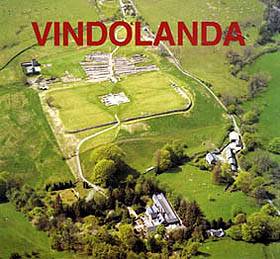
When we weren't busy filling our tummies, we found a great many things to do. For a start, we visited the Roman fort of Vindolanda to get the latest news on the current excavations (the remains of two fine granaries in the stone fort and some interesting developments in the civilian township).

The aim for this and the next few years is to "attempt to address the specific question 'was there a great divide between those who lived inside and those who lived outside the walls of the Roman fort at Vindolanda in the 3rd and 4th centuries?'". They seem to be doing very well indeed, despite the weather.

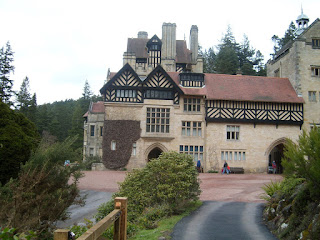
We also visited three historical homes: Wallington Hall, Cragside and Cherryburn.

Wallington Hall was the home of the Northumbrian Blacketts, who built it in the Palladian style, then it came through marriage to the Trevelyans, family of the historian G M Trevelyan. Highlights are the walled garden and the house's central hall which is decorated with the

pre-Raphaelite painter William Bell Scott's murals depicting the history of Northumberland from Roman times to the Industrial Revolution.

G M Trevelyan's uncle was Thomas Babington Macaulay, historian, Whig politician and author of The Lays of Ancient Rome. Part of his library is at Wallington.


William Bell Scott: Building the Roman Wall

Cragside, near Rothbury, was built by the industrialist William Armstrong (1810-1900), shipbuilder and armaments manufacturer in Newcastle upon Tyne. The library at Cragside was the first room in the world to be lit by electric light using the incandescent bulbs invented by Joseph Swan of Newcastle. Armstrong invented all manner of domestic mod cons for his country home, including a dishwasher, rotisserie and lift, all powered by hydroelectricity generated on his estate. The gardens are magnificent, glorious with rhododendrons and there's an enormous rock garden and miles of paths to walk.
And finally, rather less of a stately pile is Cherryburn, birthplace of Thomas Bewick (1753-1828), the engraver best known for his History of British Birds. There's a museum with portraits and items associated with Bewick, a print shop showing how Bewick made his blocks from boxwood and printed the engravings. There's also a shop selling prints made from his original blocks.

Behind the museum is the cottage where he was born and from there you can walk down to the South Tyne and wander along the river banks where he roamed as a boy learning to observe the
the local wildlife with all the fine attention to detail he brought to his later work.


Wednesday, 9 April 2008

More Travels in Britain (but not on TV)

On Thursday I'm off on some travels of my own in Britain (or at least England). First stop is


to stay with good friends whom I haven't seen for far too long. We shall enjoy some good old chinwags on matters bookish and historical, and attend the Historical Novel Society Conference at York's National Railway Museum. Then I shall be whisked off by

Mondeo Man

for a few days along


to enjoy some invigorating fresh air and scenery and of course, a visit to


too see if they're managing the excavations OK without us (who am I kidding?).
Finally, we'll be heading southward to


in deepest Cheshire for a family gathering, then home.